
A plate rolling machine is a piece of equipment that utilises work rolls to bend and form sheet metal; it can produce parts of various shapes, such as cylindrical and conical components, and is a vital piece of processing equipment. The working principle of a plate rolling machine involves applying external forces, such as hydraulic pressure and mechanical force, to drive the work rolls, thereby pressing or rolling the sheet metal into shape. Depending on the rotational movement and positional changes of the work rolls—which come in various shapes—the machine can produce parts such as elliptical, arched and cylindrical components.
The primary function of a plate rolling machine’s hydraulic system is to provide the force and power required to drive and control the rolling operation. Specifically, the hydraulic system transmits force via the pressure of hydraulic oil to achieve precise control over the rolling rolls, including rotational movement, positional adjustment and rolling force.
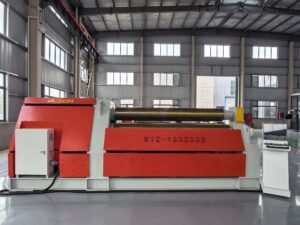
Main Components and Operating Principles of the Plate Rolling Machine’s Hydraulic System
The primary function of the plate rolling machine’s hydraulic system is to drive and control the rolling operation by transmitting hydraulic energy, thereby achieving precise bending and forming of metal plates.
Core components of the hydraulic system, such as the hydraulic pump, hydraulic cylinders and hydraulic control valves, work together to fulfil these functions.
The hydraulic pump is responsible for drawing hydraulic oil from the reservoir, pressurising it, and then delivering it to the hydraulic cylinders. The hydraulic cylinders use the pressure of the hydraulic oil to drive the pistons, thereby rotating the rolling rollers to bend and form the metal sheet.
Hydraulic control valves regulate the flow and pressure of the hydraulic oil, ensuring precise control of the plate rolling machine under various operating conditions.
The six main structural components of the plate rolling machine are:
(1) Upper and lower rolls: These are vital components of the plate rolling machine, manufactured from high-quality forged carbon steel.
(2) Frames: There is one left-hand frame and one right-hand frame; the lower roll bearings are mounted on the frames. Inside the frames are square-threaded lead screws, the upper ends of which are hinged to the bearing housings at both ends of the upper roll.
(3) Gearbox: A ZSY280 hard-tooth-surface gearbox is mounted on a channel steel base together with a spacer.
(4) Electrical components: These are all housed within a single control box for ease of operation.
(5) Unloading device: Mounted on one side of the gearbox to balance the upper rollers during unloading; unloading and retraction are performed by a hydraulic cylinder.
(6) Base: Constructed from structural steel and steel plates welded together. The frame, gearbox, motor and other components are mounted upon it, thereby forming a single integrated unit.
The daily maintenance and upkeep of the CNC plate rolling machine must not be overlooked. Regular cleaning, lubrication and tightening of the equipment ensure its proper operation and extend its service life. Furthermore, in the event of any abnormalities, such as noise or vibration, the machine must be shut down immediately for inspection to prevent damage to the equipment or safety incidents.
To find out more, please click here: https://plsoncnc.com/product-category/rolling-machine/