
Press Brake Up-and-Down Shaking: Causes, Diagnosis and Solutions
Posted by PLSON Engineering Team
Introduction
Up-and-down shaking on a press brake is a common problem, and it can have more than one cause. The ram may vibrate during the downstroke, hesitate under load, or shudder when it holds position. In many cases the fault develops gradually, so the machine still produces parts and the problem is tolerated until the angle quality or the part surface starts to suffer.
This article covers the seven most common causes of press brake up-and-down shaking, how to recognize each one, and how to resolve it. It then sets out a systematic troubleshooting sequence and the maintenance practices that prevent the problem from returning.
Safety first: Before inspecting the hydraulic system, the ram, the guide rails, or the electrical cabinet, stop the machine, switch off the main power, and follow your plant’s lockout and shutdown procedure. Hydraulic systems store pressure even after the pump stops — release residual pressure before opening any connection. The ram can move or fall if it is not mechanically supported. Never reach into the tooling area, the back gauge area, or the cabinet while the machine is running. Servicing should be carried out only by trained and authorized personnel.
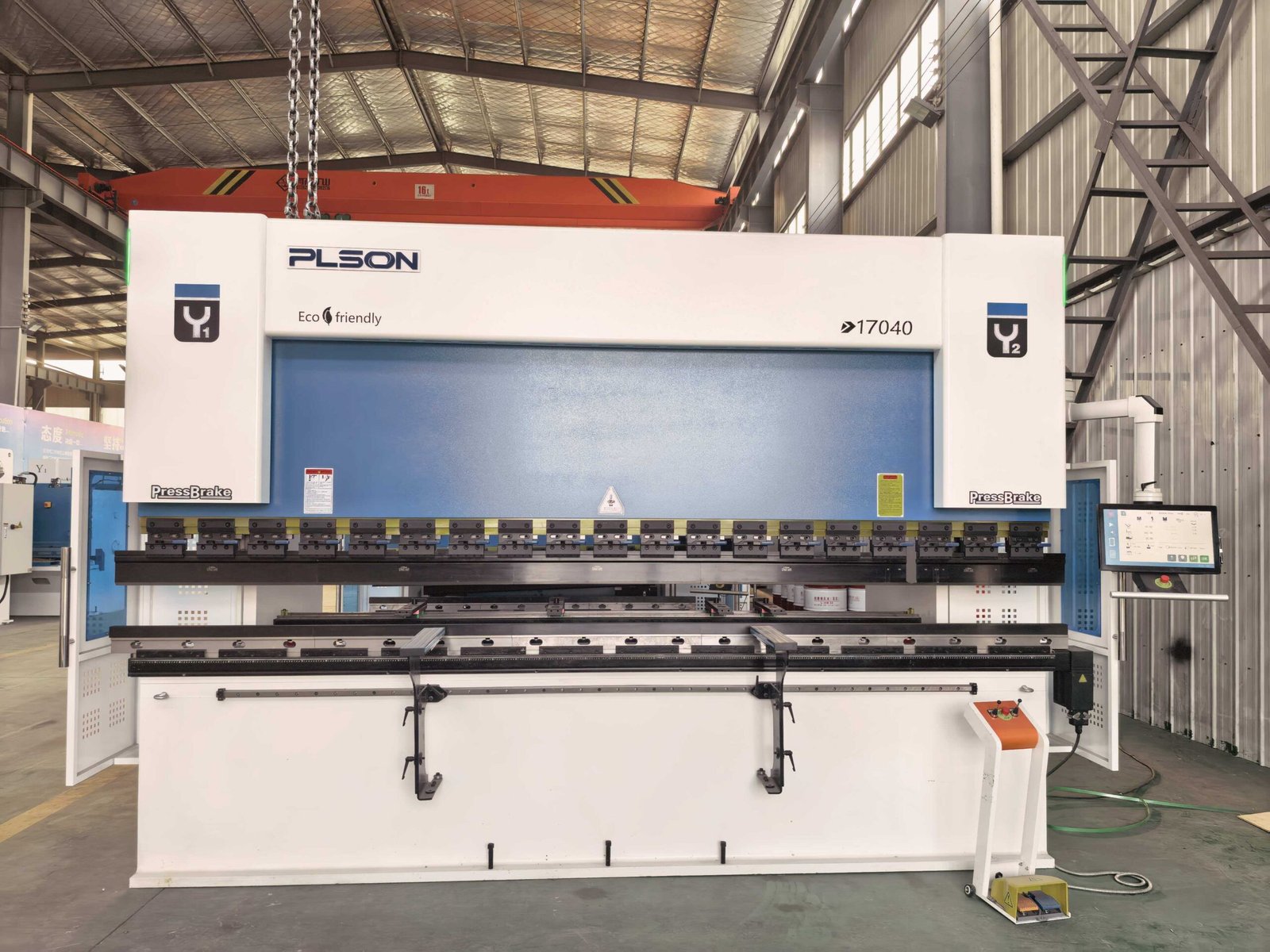
Why Shaking Matters
Shaking is more than a comfort issue. If it is not corrected:
- Bending angle becomes inconsistent from part to part and along the part length
- Surface marks, chatter marks, and tooling wear increase
- The ram, guides, and hydraulic components wear faster because of the added dynamic load
- The operator loses confidence in the machine’s repeatability and may compensate with manual adjustment
- In severe cases the shaking develops into a positioning fault or a hydraulic failure
1. Hydraulic System Problems
The hydraulic system is the core of a press brake. It supplies the force required for the bending operation. If the pump, valves, or piping develop a fault, the machine can shake up and down.
Typical symptoms
- Shaking that appears only during the loaded part of the stroke
- Pressure fluctuation visible on the gauge
- Slow, hesitant, or jerky ram movement
- Oil temperature rising faster than normal
- Noise or vibration from the pump or valve block
What to check
- Check the hydraulic oil level, oil condition, and oil temperature.
- Inspect the pump for abnormal noise, wear, or reduced output.
- Check valves for contamination, sticking, or internal leakage.
- Inspect piping, hoses, and connections for leakage, air entry, or loose fittings.
- Confirm the system pressure setting against the machine specification.
- Check the oil filter and replace it if it is clogged.
Fix
Clean or replace contaminated valves, replace damaged or aged components, and bleed air from the system after any repair. Replace the hydraulic oil and filter at the specified interval. If the shaking continues after the hydraulic system has been checked, move on to the mechanical checks below rather than continuing to adjust hydraulic settings.
2. Excessive Ram and Guide Rail Clearance
The clearance between the ram and the guide rails has a direct effect on stability. If the clearance is too large, the ram can rock or shift during the stroke and the machine will shake under load.
Typical symptoms
- Shaking or knocking that changes with load direction
- Angle variation between the left and right side of the part
- Visible movement of the ram when the machine is pushed by hand with the power off
- Uneven wear marks on the guide surfaces
What to check
- Measure the clearance between the ram and the guide rails against the manufacturer’s specification.
- Check the straightness and parallelism of the guide rails.
- Check guide wear plates and liners for wear or damage.
- Check the guide lubrication supply and confirm the surfaces are not running dry.
Fix
Adjust the ram and guide rail clearance back to specification. Replace worn wear plates or liners where adjustment alone cannot restore the correct clearance. Because guide accuracy determines the bending result, the straightness and parallelism of the rails should also be checked periodically and re-established if they are out of tolerance.
3. Ram Balancing Valve Problems
The ram balancing valve balances the pressure between the up and down movement of the ram. If the balancing valve fails, the two sides of the ram may not move in step, and the machine can shake up and down.
Typical symptoms
- The ram tilts slightly or the two sides do not reach position at the same time
- Shaking that appears at the start or the end of the stroke
- Uneven pressure readings between the left and right hydraulic circuits
- Position error on one side of the machine
What to check
- Check the working state of the balancing valve and confirm the setting matches the machine specification.
- Check for contamination or sticking in the valve.
- Check the associated pressure and position readings on the control.
- Confirm the valve is not leaking internally.
Fix
Clean the balancing valve, and replace it if cleaning does not restore correct operation. After any adjustment or replacement, re-check the level and parallelism of the ram before returning the machine to production.
4. Incorrect Back Gauge Position
The back gauge position also has a strong influence on machine stability. If the back gauge is set incorrectly — for example, if it does not support the workpiece squarely against the tooling — the machine can shake during the bending process.
Typical symptoms
- The workpiece shifts or rotates during the bend
- Shaking that appears only with certain part sizes
- Inconsistent bend position from part to part
- Stop position that does not match the program value
What to check
- Confirm the back gauge position and stop height match the workpiece dimensions and shape.
- Check that the gauge fingers contact the workpiece evenly on both sides.
- Check the gauge for looseness, backlash, or damage to the drive and guide.
- Confirm the programmed position matches the actual measured stop position.
- Check that the workpiece is long enough and heavy enough to be supported as intended.
Fix
Set the back gauge position according to the dimensions and shape of the actual workpiece. Correct any looseness or backlash in the gauge mechanism, and re-verify the stop position against the program. A back gauge that is not correctly aligned will cause position errors even when the hydraulic and guide systems are in good condition.
5. Electrical System Problems
The electrical system controls the movement and the sequence of the machine’s components. If the electrical system develops a fault, the machine may not work in a stable manner, and the instability can appear as shaking.
Typical symptoms
- Shaking accompanied by alarms or fault messages
- Intermittent movement or unexpected stopping
- Position readings that jump or drift
- Sequence that does not run as programmed
What to check
- Check sensors, including the position and pressure sensors, for correct signal and mounting.
- Check the controller and its I/O for loose terminals or fault indications.
- Check the actuators, including the proportional valves and the servo drive, for correct response.
- Check cable routing, connectors, and grounding for damage or interference.
- Check that parameters have not been changed or lost.
Fix
Replace or repair the faulty electrical component and re-verify the signal with the control system. Do not bypass or permanently disable a safety-related device to keep the machine running. If faults appear intermittently, record the alarm code and the operating condition when it occurs, as this information is often the fastest route to the cause.
6. Worktable Problems
The worktable is an important part of the press brake: it supports the workpiece during bending. If the worktable is not level, or if it is not firmly fixed, the machine can shake during the bending process.
Typical symptoms
- Shaking that appears with long or heavy workpieces
- Angle variation along the length of the part
- Visible movement of the worktable, front supports, or support arms
- Unusual noise from the support structure
What to check
- Check the worktable surface for flatness and damage.
- Check that the worktable and its supports are firmly fixed and the mounting bolts are tight.
- Check the front support arms and any material support device for looseness.
- Check the crowning setting, since incorrect crowning can imitate a worktable problem.
- Check the foundation and leveling of the machine.
Fix
Re-level and re-tighten the worktable and its supports, and repair any damaged surface. Confirm the crowning setting is correct for the plate being processed before assuming a worktable fault.
7. Workpiece Problems
Sometimes the cause of press brake up-and-down shaking comes from the workpiece itself. Uneven material, a thickness outside the intended range, or an irregular shape can all cause the machine to shake during bending.
Typical symptoms
- Shaking that occurs with specific material batches but not others
- Bending force noticeably higher or lower than expected for the sheet thickness
- Angle variation caused by thickness variation along the sheet
- The workpiece is difficult to locate against the tooling
What to check
- Check the material grade, condition, and yield strength.
- Measure the sheet thickness at several points and compare it with the drawing.
- Check the workpiece shape, size, and edge condition, including burrs and previous forming.
- Confirm the required bending force is within the capacity of the machine and tooling.
- Check that the tooling is correct for the material and the required angle.
Fix
Prepare and inspect the workpiece before bending, and confirm it suits the machine’s processing requirements. For material with significant variation, adjust the setup or the material source rather than trying to compensate with machine settings alone.
Recommended Troubleshooting Sequence
Since the causes interact, a systematic diagnosis is more reliable than adjusting one system at a time.
During diagnosis, remember that the systems affect each other. A hydraulic pressure problem can appear as a guide clearance problem, and a back gauge error can appear as an angle problem. Confirm the cause before replacing parts.
Other Contributing Factors
Beyond the seven causes above, other factors can also produce or worsen up-and-down shaking:
- Long-term wear and aging of the machine and its hydraulic components
- Incorrect or non-standard operation by the operator
- A foundation that is not adequate for the machine mass, or that has settled
- Ambient temperature extremes affecting hydraulic oil viscosity
- Tooling that is worn, damaged, or mismatched to the material
Prevention
Regular maintenance and trained operators are the two most effective ways to keep a press brake stable.
Maintenance practices
- Follow the manufacturer’s intervals for hydraulic oil and filter replacement.
- Check oil level, oil temperature, and system pressure at planned intervals.
- Clean and inspect valves, and keep the hydraulic oil clean.
- Check ram and guide rail clearance, including rail straightness and parallelism.
- Lubricate the guide rails according to the schedule.
- Check the back gauge for looseness and verify positioning accuracy.
- Keep the worktable, tooling, and support devices clean, level, and correctly fixed.
- Record every shaking or accuracy problem with cause and repair so repeat faults become visible.
Operator practices
- Train operators on correct setup, tooling change, and shutdown procedures.
- Make sure the programmed bending force suits the material and thickness.
- Report abnormal noise, vibration, or hesitation immediately rather than continuing to run the machine.
- Never adjust the hydraulic system or defeat a safety device to keep the line moving.
Conclusion
Up-and-down shaking on a press brake is a problem that deserves to be taken seriously, but it can usually be traced to a specific cause. Working through the hydraulic system, the ram and guide rail clearance, the ram balancing valve, the back gauge, the electrical system, the worktable, and the workpiece gives a reliable route to the root cause.
Once the cause is identified, the repair is usually straightforward — cleaning or replacing a valve, restoring the correct guide clearance, correcting the back gauge position, or preparing the workpiece correctly. Regular maintenance and professional operator training are what keep the problem from returning.
If the shaking continues after these checks, contact the PLSON engineering team with your machine model, control system, alarm codes, and a short video of the fault. We will help you identify the cause and the correct replacement parts.
Contact the PLSON Engineering Team for press brake troubleshooting, spare parts, and technical support.
[Contact PLSON Engineers →]
📧 Eric@plsonmachine.com
🏭 Haian Industry Park, Jiangsu Province, China