
Press Brake Types and Classification: Structure, Function, Material and Automation Level
Posted by PLSON Engineering Team
Introduction
The press brake is one of the most important machines in modern metal fabrication. It is used to bend sheet metal into angles, channels, boxes, and complex formed parts, and it appears in shipbuilding, automotive, appliance, construction, HVAC, and general sheet metal workshops.
Press brakes are not a single machine type. They differ in how force is generated, what the machine can do, what material it processes, and how much of the cycle is automated. Understanding these differences makes it much easier to choose a machine that matches real production requirements instead of overbuying or underbuying.
This guide explains the four common ways to classify a press brake and the characteristics of each type.
Technical note: Machine design, controller configuration, tooling, and performance depend on the specific model and manufacturer. The descriptions below explain general machine categories. Always confirm the actual capacity chart, control system, tooling, safety devices, and guarding with the manufacturer before ordering.
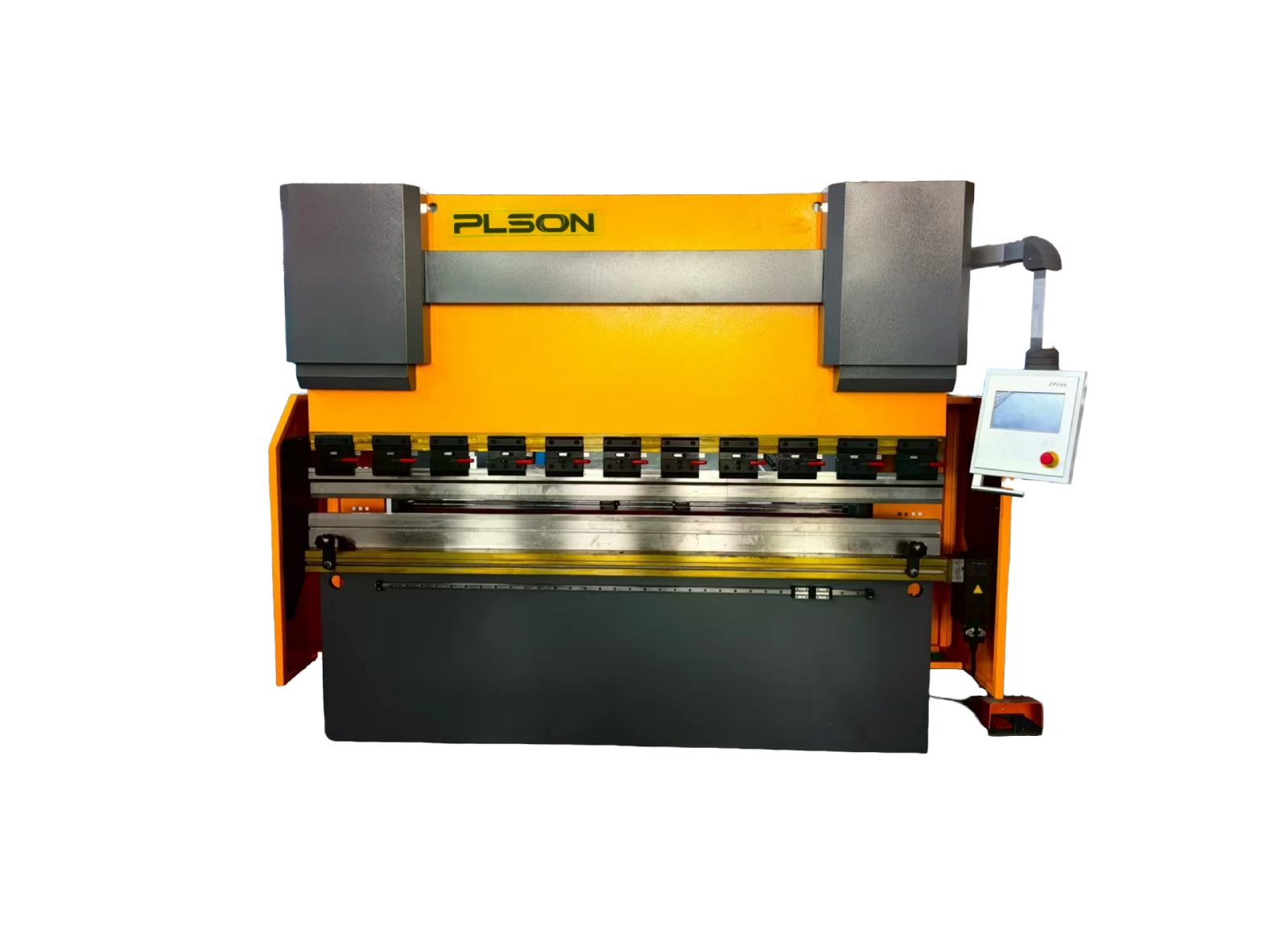
1. Classification by Structure
This is the most fundamental classification, because the drive system determines force, speed, accuracy, and maintenance requirements.
1.1 Mechanical Press Brake
A mechanical press brake uses a mechanical linkage driven by manual effort or an electric motor to generate the bending stroke.
Typical characteristics:
- Simple structure with relatively few hydraulic components
- Straightforward operation
- Lower accuracy and lower production speed compared with hydraulic and servo-electric designs
- Suitable for small batch work where bending accuracy requirements are moderate
Mechanical press brakes are still found in light fabrication, but most new production machines today are hydraulic or servo-electric.
1.2 Hydraulic Press Brake
A hydraulic press brake uses hydraulic cylinders to generate bending force.
Typical characteristics:
- High bending force
- Stable and smooth ram movement under load
- Good bending accuracy and repeatability
- Well suited to large and thick sheet metal
Hydraulic press brakes can be built in different configurations, including single-cylinder, double-cylinder, and multi-cylinder designs. In most modern machines, two hydraulic cylinders drive the ram and are synchronized by a torsion bar, a mechanical linkage, or an electro-hydraulic servo system with linear scales.
Note on cylinder count: Cylinder configuration is a design choice, not a quality ranking by itself. What matters in practice is ram parallelism, synchronization accuracy, frame rigidity, and repeatability under the actual load.
1.3 Servo-Electric Press Brake
A servo-electric press brake uses servo motors and a control system to drive the ram instead of a hydraulic power unit.
Typical characteristics:
- Fast ram response and short cycle times
- High positioning accuracy and good repeatability
- Lower energy consumption because the motor works on demand
- Cleaner operation without hydraulic oil
- Suitable for high-precision, high-efficiency, and automated production
Servo-electric press brakes are common in electronics enclosures, appliance panels, and other thin-to-medium gauge work that needs tight tolerance and fast cycle time.
Structure comparison
2. Classification by Function
2.1 Standard Press Brake
A standard press brake performs bending only. It covers the basic forming needs of general metal fabrication workshops and is the most common machine category.
2.2 Multi-Function Machine
A multi-function machine combines bending with additional operations such as shearing, punching, or embossing on one platform, so several processes can be completed without moving the workpiece between machines.
Typical characteristics:
- One machine covers several process steps
- Higher equipment utilization in small workshops
- Reduced handling and work-in-process
Technical note: Combined-function machines are a separate machine family from a standard press brake. When comparing options, confirm whether the machine is genuinely a single integrated unit or a press brake with additional attachments, because this affects rigidity, tooling options, accuracy, and maintenance.
2.3 CNC Press Brake
A CNC press brake is controlled by a numerical control system. The bending parameters are programmed, and the machine positions the ram and back gauge automatically.
Typical characteristics:
- High accuracy and consistent repeatability
- Fast setup and short changeover time
- Easier operation for complex, multi-bend parts
- Program storage and recall for repeat jobs
- Suitable for automotive, appliance, construction, and other series production
CNC press brakes commonly control the Y1 and Y2 ram axes and the X, R, and Z back gauge axes. Higher axis counts add more automation but also require more operator training.
3. Classification by Material
3.1 Sheet Metal Press Brake
Sheet metal press brakes bend flat plate, including carbon steel, stainless steel, and aluminum sheet.
These machines are characterized by high bending force, good stability, and good bending accuracy, and they cover a wide range of plate thickness and width requirements.
Material behavior matters as much as machine capacity:
- Carbon steel is the reference material for most capacity charts.
- Stainless steel requires higher force because of its higher yield strength and work hardening.
- Aluminum requires lower force but needs attention to surface marking and tooling selection.
3.2 Tube Bending Machine
A tube bending machine is designed for bending round tube, square tube, or rectangular tube, using dedicated dies, mandrels, and clamping fixtures to form accurate bends.
These machines are widely used in furniture, construction, automotive, and mechanical equipment manufacturing.
Technical note: Tube bending is a different forming process from sheet metal bending. Tube bending machines are usually a separate machine category rather than a press brake variant, and the tooling and process planning are not interchangeable.
3.3 Press Brake for Special Materials
Some applications require processing titanium alloys, copper alloys, composites, and other special materials.
These machines may need specific structural design, tooling material, surface protection, and process parameters to handle the mechanical properties of the workpiece. They are used in aerospace, medical equipment, and other demanding industries.
4. Classification by Automation Level
4.1 Manual Press Brake
A manual press brake relies on the operator to position the workpiece and to control the bending stroke by lever or handwheel.
Typical characteristics:
- Lowest investment cost
- Suitable for small batch work with moderate accuracy requirements
- Production speed and consistency depend heavily on operator skill
4.2 Semi-Automatic Press Brake
A semi-automatic press brake adds some automated functions to a manually operated machine, such as powered back gauging, automatic feeding, or automatic positioning.
Typical characteristics:
- Higher productivity than a fully manual machine
- Reduced operator fatigue and lower dependence on manual positioning
- A practical middle step for workshops moving from manual to CNC production
4.3 Fully Automatic Press Brake
A fully automatic press brake uses a CNC system to complete the bending cycle automatically, including positioning, bending, and part handling when a robot or automation cell is included.
Typical characteristics:
- High accuracy and high efficiency
- Repeatable results with minimal operator intervention
- Suitable for large volume and high precision production
Fully automatic machines are often integrated with robot bending cells, automatic tool changers, and angle measurement systems.
5. Summary Comparison
6. How to Choose the Right Press Brake
When selecting a press brake, work through the following questions in order:
- Material and thickness — What material will be bent most often, and what is the maximum thickness and length?
- Bending force — Does the machine provide enough tonnage for the intended thickness, width, material tensile strength, and die opening?
- Part complexity — How many bends per part, and are there special shapes or small flanges?
- Accuracy requirement — What angle tolerance and repeatability does the finished part require?
- Batch size — Is production one-off, small batch, or continuous series production?
- Automation level — Is a manual, semi-automatic, or fully automatic machine the best fit for the labor and volume situation?
- Tooling — What tooling is required, and does the machine support quick tool changes?
- Controller and axes — Which control system and axis configuration are needed for the parts being produced?
- Safety and guarding — What guarding, light curtains, and safety devices are required for the planned operation?
- Service and support — What installation, training, spare parts, and after-sales support are available?
7. Conclusion
Press brakes differ widely in structure, function, material capability, and automation level, and each category serves a different production requirement.
Choosing by classification is useful, but the decision must be based on actual workpiece data: material, thickness, bend length, part geometry, accuracy target, and production volume. Matching the machine to real requirements improves bending efficiency, controls investment and operating cost, and supports consistent product quality.
If you are unsure which press brake configuration fits your parts, send your drawing, material, thickness, and bend length to the PLSON team. We will help you confirm the required tonnage, tooling, controller, and machine configuration before you order.
Contact the PLSON Engineering Team for press brake selection support, tooling advice, and technical consultation.
[Contact PLSON Engineers →]
📧 Eric@plsonmachine.com
🏭 Haian Industry Park, Jiangsu Province, China