
Plate Bending Machine for Shipbuilding: Complete Selection and Application Guide
Posted by PLSON Engineering Team | Reading time: 10 minutes
Introduction
Shipbuilding depends on accurate plate forming. Hull shells, deck sections, bulkheads, cylindrical structures, and many marine components must be shaped from flat steel plates before assembly and welding. A suitable plate bending machine—also called a plate rolling machine or plate roll bending machine—helps shipyards form these plates efficiently while maintaining the required radius, geometry, and repeatability.
Choosing the right machine is not simply a matter of selecting the highest tonnage. The decision should be based on the shipyard’s plate thickness, working width, material grade, required bending diameter, production volume, part geometry, and level of automation.
This guide explains how plate bending machines are used in shipbuilding, which machine types are available, what specifications matter most, and how to prepare a reliable request for quotation.
1. Why Plate Bending Machines Are Important in Shipbuilding
Shipbuilding involves a wide range of plate shapes. Some parts require a simple cylindrical radius, while others need a changing radius, a cone, or a more complex curved profile. Manual forming or repeated heating can be slow and difficult to control, especially when working with thick or high-strength marine steel.
A properly selected plate bending machine can help shipyards:
- Form hull and deck plates into repeatable curves
- Reduce manual correction and rework
- Improve the fit-up accuracy of welded sections
- Process large plates with controlled force
- Reduce flat ends through effective pre-bending
- Store and repeat commonly used bending programs
- Improve production consistency across shifts
The machine should be treated as part of the complete forming process. Plate preparation, lifting equipment, measuring tools, welding sequence, and final inspection all influence the finished result.
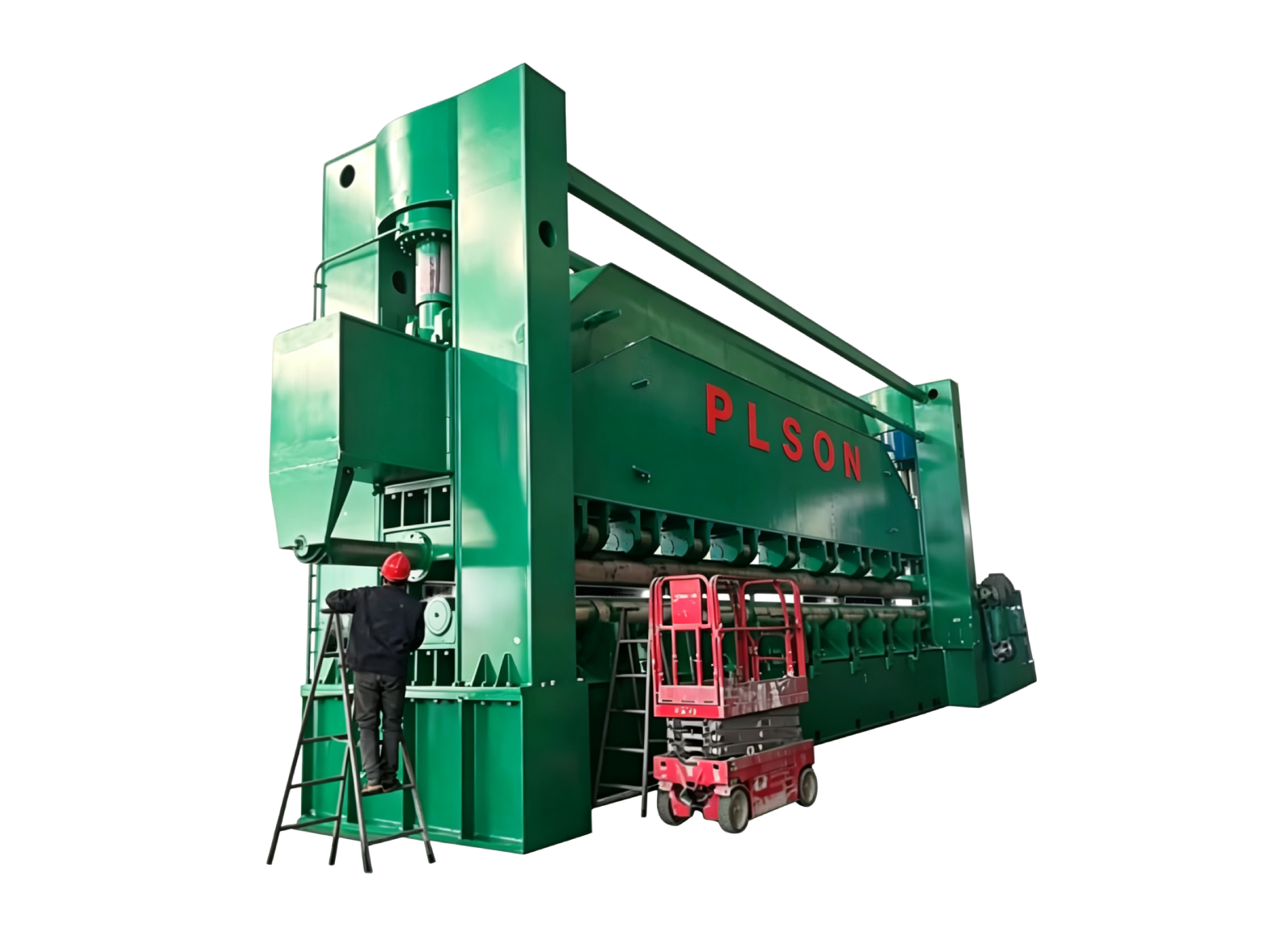
2. Typical Shipbuilding Applications
Hull Plates
Hull plates often require large-radius forming or variable curvature. The required machine capacity depends on the plate grade, thickness, width, and target radius. A heavy-duty hydraulic machine is commonly considered when the shipyard processes thick or wide plates on a regular basis.
Deck Plates
Deck plates may require cylindrical, transverse, or longitudinal curvature. Consistent forming helps reduce gaps during assembly and supports a more efficient welding process.
Bulkheads and Internal Structures
Bulkheads, stiffeners, and internal shell sections may require smaller radii or localized curved profiles. A machine with accurate roll adjustment and repeatable positioning can simplify the production of repeated components.
Cylindrical Marine Sections
Cylindrical sections can include tanks, ducts, pipes, and other marine structures. Four-roll machines are often attractive for repetitive cylindrical work because they can combine plate clamping, pre-bending, and rolling in one setup.
Conical and Transition Components
Conical sections and transition pieces require coordinated adjustment of the rolls across the plate width. Confirm that the selected machine and control system support the required conical rolling method before purchasing.
3. Types of Plate Bending Machines for Shipbuilding
Three-Roll Plate Bending Machine
Three-roll machines use one upper roll and two lower rolls. Depending on the design, the machine may be symmetrical or asymmetrical.
Advantages:
- Suitable for general plate rolling
- Available in mechanical and hydraulic configurations
- Can be used for cylinders, arcs, and some conical work
- Often offers a practical solution for medium-duty production
Important consideration: Standard symmetrical three-roll machines may leave straight ends because the plate edges cannot always be bent fully between the roll contact points. Additional pre-bending or a separate process may be required.

Four-Roll Plate Bending Machine
Four-roll machines generally use an upper roll, lower roll, and two side rolls. The lower roll can clamp the plate against the upper roll while the side rolls position and form the plate.
Advantages:
- Strong plate-clamping capability
- Efficient pre-bending of plate ends
- Reduced handling between operations
- Good repeatability for cylindrical production
- Suitable for CNC-assisted positioning
Four-roll machines are often considered for shipyards that need repeatable production, reduced flat ends, and faster setup. The final choice still depends on the required thickness, width, diameter, and part geometry.

CNC or Universal Plate Rolling Machine
CNC and universal machines add digital control to roll positioning, speed, pressure, and stored programs. These systems can be useful when the shipyard produces multiple part types or needs consistent results across different operators.
CNC control does not replace correct machine sizing. The frame, rolls, hydraulic system, drive, and safety system must all be rated for the intended work.

4. Key Specifications to Check
Maximum Bending Thickness
Confirm both the maximum rolling thickness and the maximum pre-bending thickness. These are not always the same. Pre-bending capacity is often lower than the machine’s general rolling capacity.
Maximum Working Width
The working width should cover the widest plate that the shipyard plans to process. Leave enough practical margin for positioning, edge conditions, and future production requirements.
Minimum Rolling Diameter
The minimum diameter depends on the machine design, roll diameter, roll spacing, material properties, and bending method. Request a capacity chart for the actual material and thickness rather than relying only on a general catalogue value.
Material Grade and Yield Strength
Shipbuilding plates may have different grades and strength levels. Higher-strength material generally requires more forming force and may reduce the machine’s effective thickness or diameter capacity.
Provide the manufacturer with:
- Material grade
- Yield strength or tensile strength, when available
- Plate thickness range
- Plate width range
- Required inside diameter or radius
Pre-Bending Capability
Ask how much straight-end length remains after pre-bending. A machine with strong pre-bending performance can reduce trimming, correction, and fit-up work.
Roll Diameter and Frame Rigidity
The roll diameter and frame design affect stiffness, load distribution, and resistance to deflection. For heavy shipbuilding plates, the machine must be designed to withstand the required load without excessive roll deformation.
Drive and Hydraulic System
Check the drive torque, hydraulic pressure, roll rotation speed, and lifting or tilting functions. Heavy-duty production requires a stable hydraulic system and components that can withstand repeated loading.
CNC Control and Automation
Depending on production needs, useful functions may include:
- Digital roll-position setting
- Multi-step programs
- Conical rolling assistance
- Automatic positioning
- Workpiece data storage
- Repeatable speed and pressure control
- Fault and safety monitoring
5. How to Choose the Right Plate Bending Machine
Use the following decision process before contacting a supplier.
Step 1: List the Real Production Range
Record the minimum and maximum plate thickness, width, material grade, and required diameter. Do not size the machine only for an occasional maximum value or only for the most common thin plate.
Step 2: Separate Rolling Capacity from Pre-Bending Capacity
A machine may roll a certain thickness after the plate has been pre-bent, but it may not pre-bend the same thickness. Ask for both values in writing.
Step 3: Identify the Most Common Part Shapes
Decide whether the main work consists of cylinders, arcs, cones, variable-radius hull plates, or a combination. The machine layout and control system should match the dominant geometry.
Step 4: Estimate Production Volume
For occasional repair work, a simpler machine may be sufficient. For repeated ship-section production, a four-roll or CNC machine may reduce setup time and improve consistency.
Step 5: Check Material Handling Conditions
Large shipbuilding plates require suitable cranes, side supports, feeding systems, and safety zones. A machine cannot perform efficiently if the plate cannot be loaded and supported safely.
Step 6: Request a Demonstration or Capacity Review
Send representative drawings and material data to the manufacturer. Ask for a forming test or a capacity review using your actual plate conditions whenever possible.
6. Plate Bending Process for Shipbuilding
A typical forming workflow includes the following stages:
- Material inspection: Verify plate grade, thickness, width, surface condition, and rolling direction when relevant.
- Surface preparation: Remove debris, scale, and foreign material that could affect positioning or damage the rolls.
- Machine setup: Confirm roll spacing, workpiece position, program data, and safety devices.
- Plate loading: Use appropriate lifting equipment and keep personnel outside the danger zone.
- Edge pre-bending: Form the leading and trailing edges as required by the machine design and target radius.
- Main rolling: Pass the plate through the rolls in controlled steps until the required curvature is reached.
- Measurement: Check radius, diameter, symmetry, and edge condition using suitable measuring tools.
- Correction: Make controlled adjustments rather than applying excessive force or repeated uncontrolled passes.
- Final inspection: Confirm the geometry before fit-up, tack welding, or assembly.
The actual sequence may vary according to the machine type, plate grade, thickness, and hull geometry.
7. Three-Roll vs. Four-Roll for Shipbuilding
Neither design is automatically best for every shipyard. Choose based on the actual part range, capacity, production volume, and budget.
8. Benefits of CNC Control
CNC control can provide measurable benefits when the shipyard produces repeat parts or uses multiple operators. Stored programs can reduce repeated manual calculations and help maintain consistent roll positions.
Potential benefits include:
- Faster setup for repeated workpieces
- Improved repeatability between production shifts
- Easier adjustment of roll positions
- Better support for conical or multi-stage forming
- Reduced dependence on individual operator experience
- More traceable process data
However, the program must be based on correct material data and verified by test forming. CNC control improves repeatability; it cannot compensate for an incorrectly selected machine or incorrect tooling conditions.
9. Maintenance and Safety Requirements
Maintenance Checklist
- Inspect hydraulic oil level and oil condition
- Check hydraulic hoses, fittings, and cylinders for leakage
- Lubricate bearings and moving components according to the manual
- Keep roll surfaces clean and free from damaging debris
- Check roll alignment and unusual vibration
- Inspect electrical connections and control functions
- Verify emergency stops and protective devices
- Calibrate or inspect positioning systems at scheduled intervals
Safety Checklist
- Never exceed the machine’s verified capacity
- Use approved lifting equipment for large plates
- Keep hands and personnel away from roll contact areas
- Confirm the plate is properly supported before rolling
- Stop the machine before making adjustments near the rolls
- Isolate power and release hydraulic pressure before maintenance
- Train operators on emergency procedures and machine limits
10. What to Include in an RFQ
To receive an accurate recommendation and quotation, provide the supplier with:
- Material type and grade
- Minimum and maximum thickness
- Maximum plate width
- Required inside diameter or radius
- Minimum and maximum production quantities
- Cylinder, cone, arc, or variable-radius shapes
- Required pre-bending performance
- Desired control system and automation level
- Available power supply
- Workshop space and lifting conditions
- Delivery, installation, and training requirements
A supplier should be able to explain the recommended configuration and identify any limits instead of quoting a machine based only on one nominal thickness.
Conclusion
A plate bending machine for shipbuilding must be selected according to the complete forming process, not just a single tonnage number. Plate thickness, working width, material grade, minimum diameter, pre-bending capability, frame rigidity, roll design, control system, and production volume all influence the final result.
Three-roll machines can provide a practical solution for many general applications, while four-roll and CNC machines may offer advantages for repeatable production, efficient pre-bending, and complex marine components. The most reliable approach is to prepare representative plate data and drawings, request a verified capacity review, and confirm the machine’s performance through a demonstration or forming test.
[Contact PLSON Engineers for a Shipbuilding Plate Bending Solution →]
Related topics: Three-Roll vs. Four-Roll Plate Bending Machines, CNC Plate Rolling Machine Features, Ship Hull Plate Bending Process.
[Talk to a PLSON Engineer →]
📧 Eric@plsonmachine.com
🏭 Haian Industry Park, Jiangsu Province, China