
How to Choose a Plate Bending Machine for Shipbuilding
Introduction
Shipbuilding requires the accurate forming of steel plates into cylindrical sections, curved hull panels, decks, bulkheads, tanks, and other structural components. A plate bending machine—also commonly called a plate rolling machine—plays an important role in this process by bending flat metal plates into the required radius or shape.
Choosing the right plate bending machine for shipbuilding is not simply a matter of selecting the largest available model. The machine must match the shipyard’s plate thickness, working width, material grade, required bending radius, production volume, and accuracy requirements. The right configuration can improve forming quality, reduce rework, and support safer and more efficient production.
This guide explains the main factors to consider when selecting a plate bending machine for shipbuilding applications.
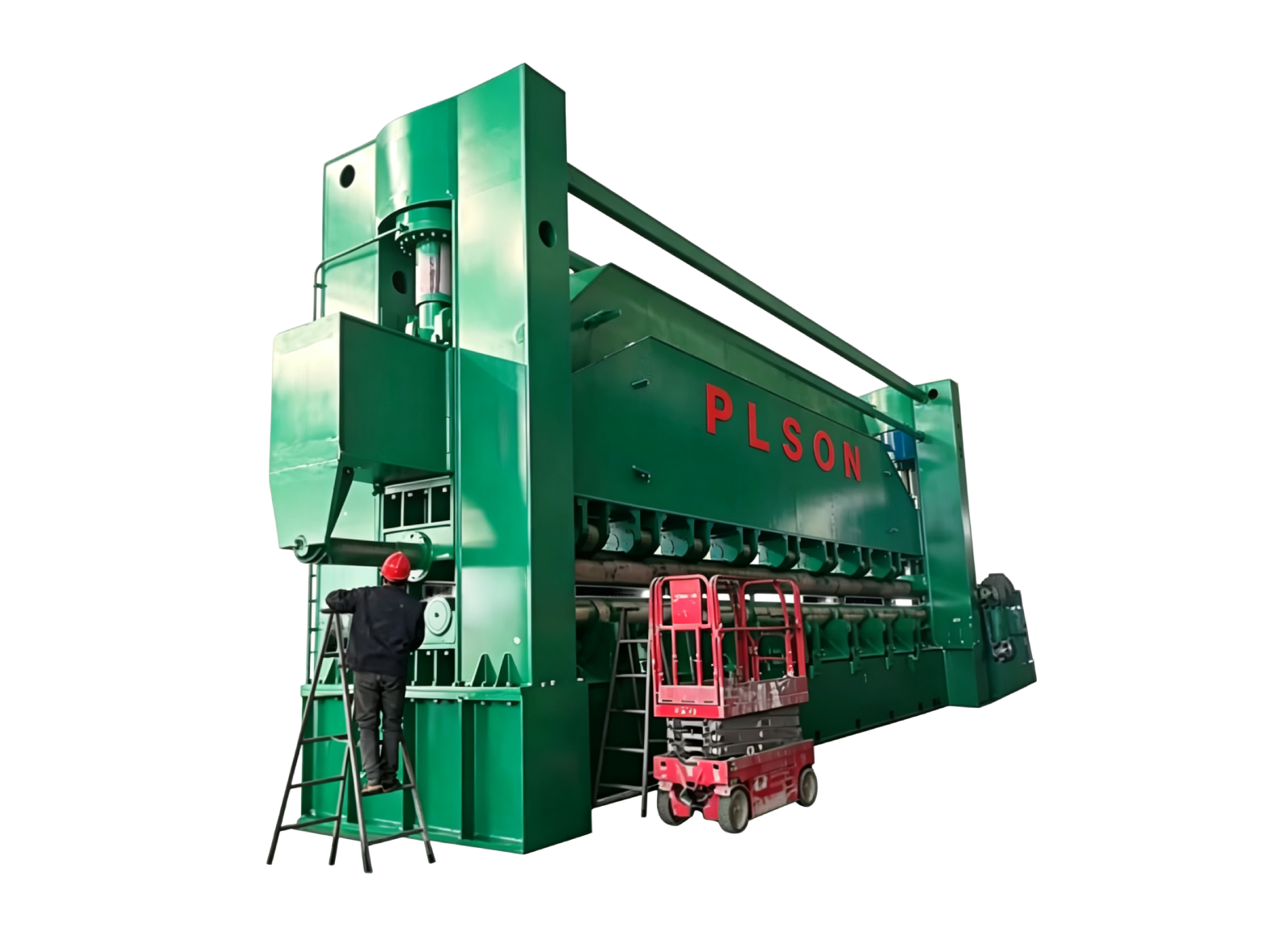
1. Understand Your Shipbuilding Applications
Before comparing machine models, define the types of workpieces the machine will produce. Common shipbuilding applications include:
- Curved hull plates
- Deck plates and side plates
- Bulkheads and internal structural panels
- Cylindrical tank sections
- Pipes and large-diameter shells
- Conical or tapered components
- Pressure vessel and marine equipment components
Different workpieces may require different bending radii, plate thicknesses, and forming methods. A machine designed for general cylindrical rolling may not be the best choice for large curved hull plates or tapered sections.
A clear application list helps determine whether the shipyard needs a standard three-roll machine, a four-roll machine, a CNC universal plate rolling machine, or a customized heavy-duty configuration.
2. Confirm the Maximum Plate Thickness
The maximum plate thickness is one of the most important selection criteria. It should be based on the thickest material that the machine will process regularly, rather than an occasional maximum value alone.
When confirming the required capacity, consider:
- Maximum bending thickness
- Maximum pre-bending thickness
- Plate material and yield strength
- Required bending diameter
- Whether the plate is bent once or through multiple passes
Higher-strength shipbuilding steel generally requires greater forming force than ordinary mild steel of the same thickness. Therefore, machine capacity should be evaluated together with the material’s mechanical properties. A machine rated only by thickness without considering material strength may not provide a reliable selection basis.
It is also advisable to leave a reasonable capacity margin for future production changes. However, excessive oversizing may increase equipment cost and operating energy consumption.
3. Select the Correct Working Width
The working width refers to the effective length of the rolls available for plate forming. It should be greater than or equal to the maximum plate width that the shipyard plans to process.
A suitable working width helps to:
- Support the entire plate during bending
- Maintain more uniform pressure distribution
- Reduce edge deformation
- Improve the consistency of curved panels
- Avoid repeated repositioning of large plates
For large shipbuilding plates, the roll length and machine frame must be designed to withstand the load across the working width. The machine should not be selected based on roll length alone; the frame rigidity, roll deflection resistance, and hydraulic capacity must also be evaluated.
4. Define the Required Bending Radius
The required minimum inside diameter or bending radius determines the machine’s forming capability. Different shipbuilding components may require large-radius curves, tight cylindrical sections, or variable-radius surfaces.
When providing requirements to a machine manufacturer, specify:
- Minimum inside diameter or minimum bending radius
- Target finished diameter or radius
- Plate thickness
- Plate width
- Material grade
- Whether pre-bending is required
The actual minimum diameter depends on several factors, including roll diameter, roll arrangement, plate thickness, material strength, and machine structure. A smaller required diameter may require a specific roll configuration or customized design.
Do not evaluate the minimum rolling diameter separately from plate thickness and material. These parameters must be assessed as a complete working condition.
5. Choose Between Three-Roll and Four-Roll Machines
Three-roll and four-roll plate rolling machines are both used in metal forming, but they provide different operating characteristics.
A three-roll machine can be a practical choice for shipyards with varied workpieces and moderate production requirements. A four-roll machine may be more suitable when the shipyard values fast feeding, convenient alignment, reduced handling, and repeatable production.
The decision should be based on actual workpieces, production volume, operator capability, and budget rather than on machine type alone.
6. Consider the Need for Pre-Bending
Pre-bending is essential when the finished workpiece must have a continuous curve with minimal straight edges at the plate ends. If the ends are not pre-bent sufficiently, additional trimming, correction, or welding preparation may be required.
When evaluating a machine, compare:
- Maximum pre-bending thickness
- Pre-bending method
- Required plate overhang
- Straight-edge length after forming
- Ease of switching between rolling and pre-bending operations
For shipbuilding, pre-bending performance can affect the fit-up quality of curved plates and cylindrical sections. A machine with a suitable pre-bending configuration can reduce rework and improve the consistency of subsequent assembly and welding operations.
7. Evaluate the Hydraulic System and Drive Capacity
Shipbuilding applications often involve large and heavy plates. The hydraulic system and drive system must provide sufficient force and torque throughout the forming process.
Important points to review include:
- Hydraulic cylinder capacity
- Hydraulic pump performance
- Pressure control stability
- Roll driving torque
- Motor power
- Transmission design
- Protection against overload
- Availability of replacement hydraulic components
Stable hydraulic pressure helps maintain consistent roll position and forming force. Adequate driving torque reduces the risk of plate slipping during rolling, especially when processing thick or high-strength plates.
The machine should also include suitable pressure and overload protection to reduce the risk of damage to the rolls, bearings, hydraulic components, or workpiece.
8. Check Frame Rigidity and Roll Design
The machine frame and rolls must withstand the bending loads generated during heavy plate forming. Insufficient rigidity may lead to roll deflection, uneven curvature, edge deformation, and reduced dimensional accuracy.
Ask the manufacturer about:
- Frame construction and manufacturing method
- Roll material and heat treatment
- Roll diameter and effective length
- Roll deflection control
- Bearing capacity
- Alignment accuracy
- Stress-relief treatment of the frame
For wide shipbuilding plates, roll deflection control is especially important. The machine should maintain an appropriate load distribution across the plate width rather than concentrating excessive force in the central or edge areas.
9. Decide Whether CNC Control Is Necessary
CNC control is valuable when the shipyard processes multiple workpieces, repeats similar jobs, or requires precise and consistent roll positioning.
A CNC plate bending machine may provide functions such as:
- Digital roll-position control
- Automatic calculation of roll movements
- Program storage and recall
- Multi-pass rolling control
- Taper rolling support
- Position feedback
- Repeatable production parameters
- Production data recording
CNC control can reduce manual adjustment and improve repeatability. It is particularly useful when production involves different plate thicknesses, diameters, or complex forming sequences.
However, the CNC system should be matched to the actual process. When comparing machines, confirm the control interface, axis configuration, position feedback method, program capacity, operator training requirements, and after-sales support.
10. Consider Plate Alignment and Handling Equipment
Large shipbuilding plates are difficult to position manually. Alignment and handling features can improve both production efficiency and operational safety.
Depending on the machine configuration, useful auxiliary equipment may include:
- Side alignment devices
- Front and rear supports
- Plate feeding tables
- Hydraulic lifting devices
- Side supports for large workpieces
- Workpiece ejecting or tilting devices
- Crane or loading interface provisions
Accurate alignment helps reduce edge misalignment and improves the consistency of the finished workpiece. For large plates, auxiliary handling equipment can also reduce the physical workload placed on operators.
11. Review Safety and Maintenance Features
A plate bending machine for shipbuilding should be designed for safe operation, inspection, and maintenance. Before purchase, confirm the availability of:
- Emergency stop devices
- Clearly defined operating controls
- Safety guards where required
- Hydraulic pressure protection
- Overload protection
- Safe access for inspection
- Lockout and power-isolation procedures
- Maintenance access to hydraulic and electrical components
Regular maintenance should include hydraulic oil inspection, lubrication, roll surface cleaning, fastener checks, bearing inspection, electrical-system checks, and CNC calibration where applicable.
A machine that is easy to inspect and maintain can reduce unexpected downtime and support more stable long-term operation.
12. Compare Total Cost of Ownership
The purchase price is only one part of the total cost. A complete evaluation should include:
- Machine purchase price
- Optional accessories
- Transportation and installation
- Commissioning and operator training
- Energy consumption
- Hydraulic oil and consumables
- Replacement parts
- Routine maintenance
- Technical support
- Expected service life
A lower-cost machine may not be the most economical option if it requires frequent adjustment, produces more rework, or has limited technical support. Compare the expected productivity, accuracy, maintenance requirements, and service response together with the initial investment.
13. Information to Provide When Requesting a Quote
To receive an accurate recommendation, provide the manufacturer with as much of the following information as possible:
- Maximum plate thickness
- Maximum plate width
- Minimum and typical finished diameter or radius
- Plate material and yield strength
- Required pre-bending thickness
- Typical workpiece shapes
- Expected production volume
- Required accuracy and repeatability
- Preferred three-roll or four-roll configuration
- CNC, automation, and auxiliary equipment requirements
- Installation location and power conditions
- Operator training and after-sales service expectations
The more complete the process information, the more accurately the manufacturer can recommend the roll diameter, hydraulic capacity, motor power, CNC configuration, and auxiliary devices.
Conclusion
Choosing a plate bending machine for shipbuilding requires a comprehensive evaluation of the application, plate thickness, working width, material strength, bending radius, pre-bending requirements, machine structure, hydraulic system, CNC functions, safety features, and total operating cost.
For general and flexible production, a properly configured three-roll machine may be sufficient. For faster positioning, continuous pre-bending, repetitive work, and higher automation, a four-roll or CNC plate rolling machine may provide greater productivity and consistency.
The best solution is not necessarily the largest or most highly automated machine. It is the configuration that matches the shipyard’s actual materials, workpieces, production targets, and long-term development plans. Before making a purchase, provide detailed plate and workpiece information to the manufacturer and request a technical proposal based on real operating conditions.
[Talk to a PLSON Engineer →]
📧 Eric@plsonmachine.com
🏭 Haian Industry Park, Jiangsu Province, China